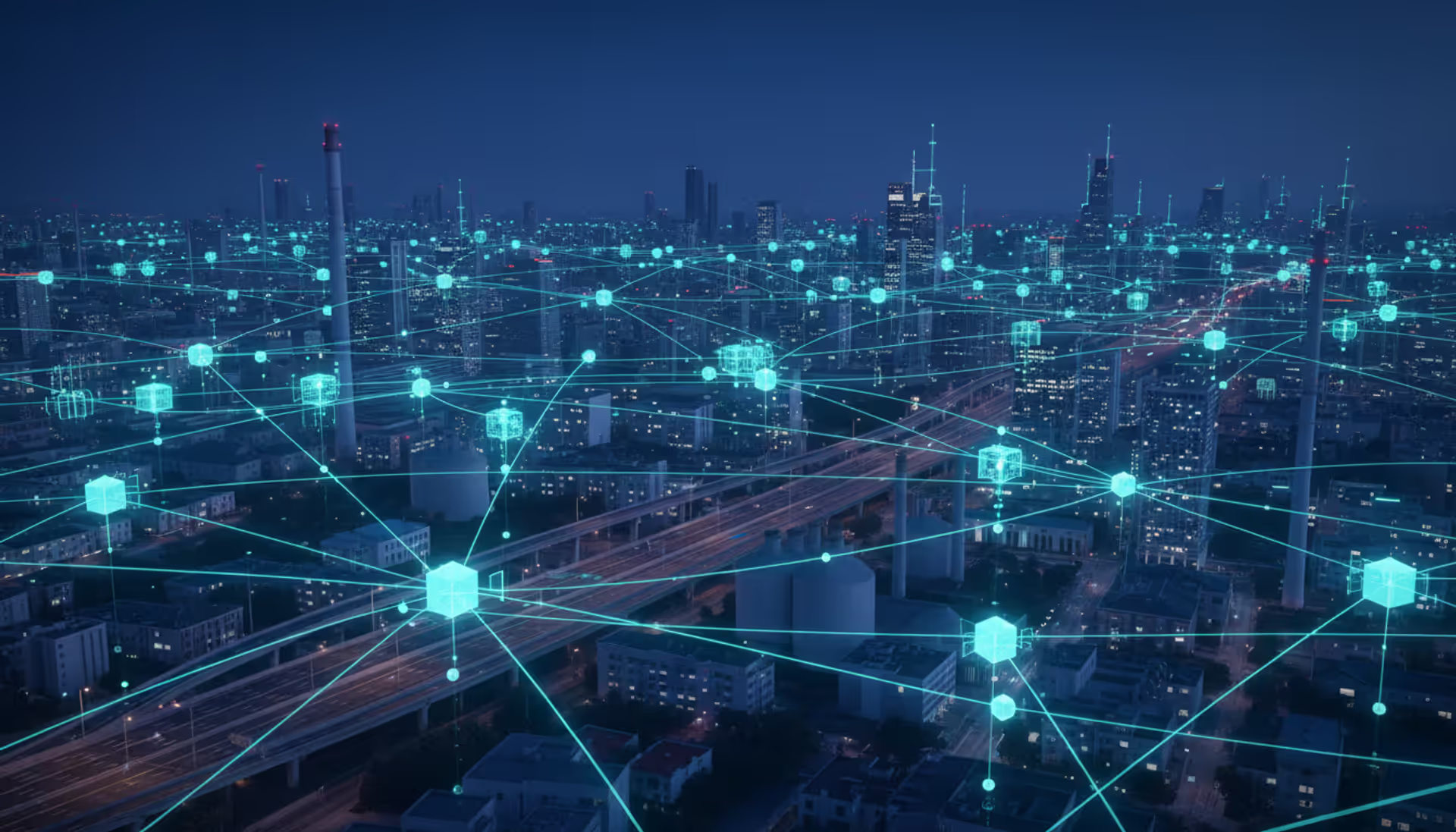
The way we process data is shifting from distant server farms to the physical locations where that data originates. This architectural change addresses fundamental problems with traditional computing models: latency, bandwidth limitations, and the need for real-time decision-making in environments where milliseconds matter.
Understanding Edge Computing Fundamentals
Edge computing processes data at or near the source of data generation rather than transmitting it to centralized data centers hundreds or thousands of miles away. The "edge" refers to the periphery of a network—the boundary between the physical world and the digital infrastructure that processes information about it.
Think of it like having a skilled assistant in every room of a large building versus one expert sitting in the basement. The basement expert might have more resources and knowledge, but the room assistants can respond immediately to what's happening around them without waiting for messages to travel up and down stairs.
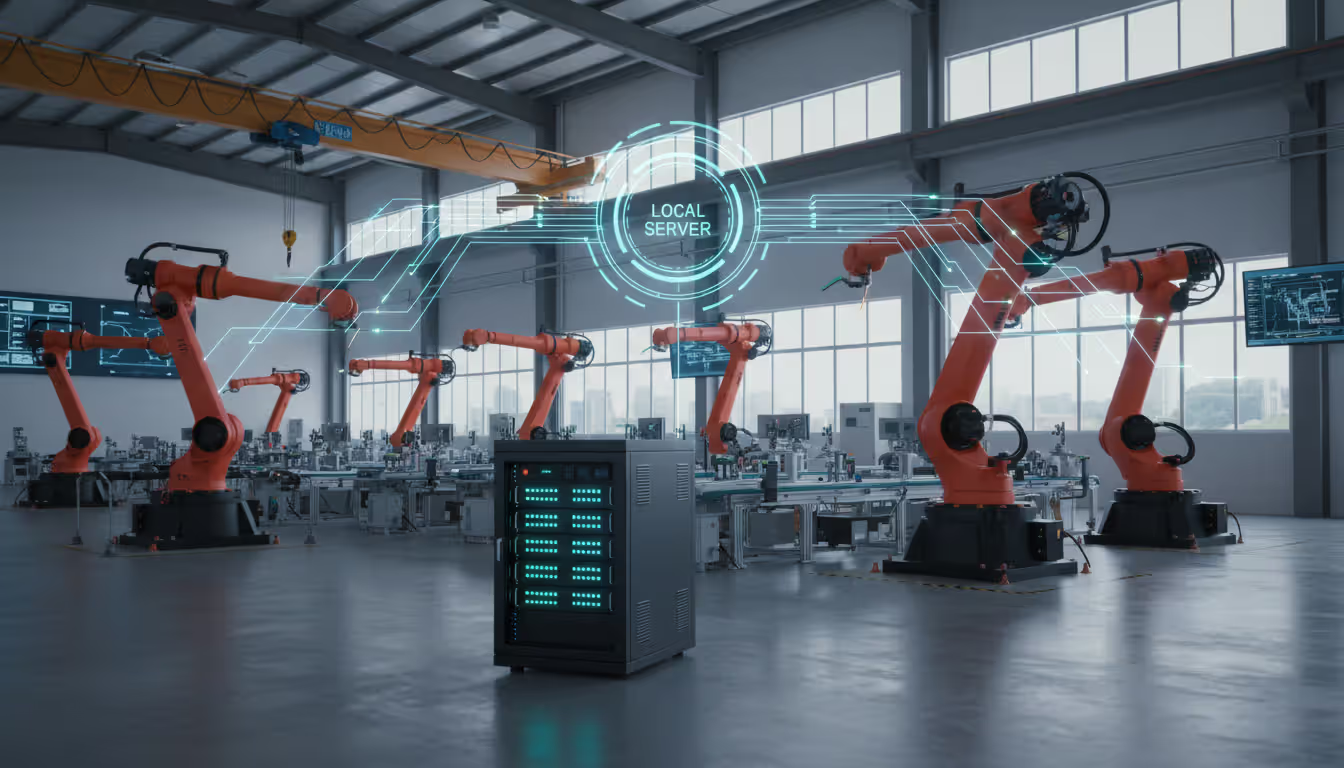
A manufacturing robot equipped with edge computing capability analyzes sensor data on-site to detect equipment vibrations that signal impending failure. It adjusts operations within milliseconds rather than sending data to a remote cloud, waiting for analysis, and receiving instructions back—a round trip that might take 100-200 milliseconds or more. In precision manufacturing, that delay translates to defective products, equipment damage, or safety hazards.
The fundamental principle involves deploying computational resources—processors, storage, networking equipment—physically closer to where data originates. A retail store might have a small server rack analyzing customer traffic patterns. An oil rig deploys ruggedized computing equipment to monitor drilling operations. A traffic intersection houses processors that coordinate signal timing based on real-time vehicle flow.
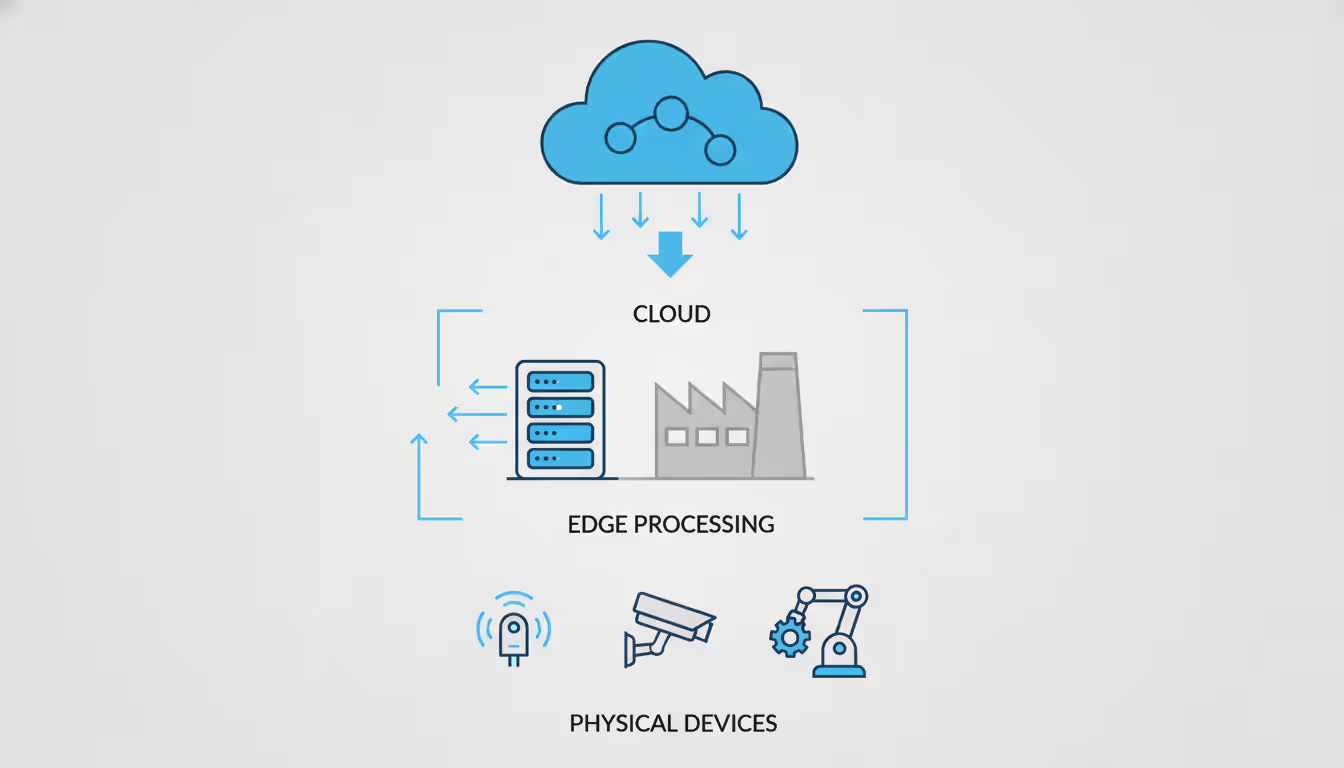
This distributed approach doesn't eliminate centralized cloud infrastructure. Instead, it creates a tiered system where time-sensitive processing happens locally while broader analytics, long-term storage, and less urgent tasks remain in regional or centralized facilities.
Author: Chloe Bramwell;
Source: baltazor.com
Edge Computing vs Cloud Computing
Cloud computing and edge computing serve different purposes within modern IT architectures. Understanding when each makes sense requires examining their fundamental characteristics.
Cloud computing centralizes resources in large facilities operated by providers like AWS, Microsoft Azure, or Google Cloud. These data centers offer massive scale, sophisticated services, and economies of scale that individual organizations cannot match. An application running in the cloud can instantly scale to handle millions of users, tap into advanced machine learning services, and store petabytes of data.
Edge computing distributes smaller-scale resources to numerous locations close to data sources. A chain of 500 retail stores might deploy edge servers in each location rather than processing all store data in a single cloud region.
Feature
Edge Computing
Cloud Computing
Data processing location
At or near data source (on-premises, local facilities)
Data stays local, reduced exposure during transmission
Centralized security, data travels across networks
Cost structure
Higher per-location infrastructure costs
Pay-as-you-go, economies of scale
Scalability
Limited by local hardware, distributed management
Nearly unlimited, managed centrally
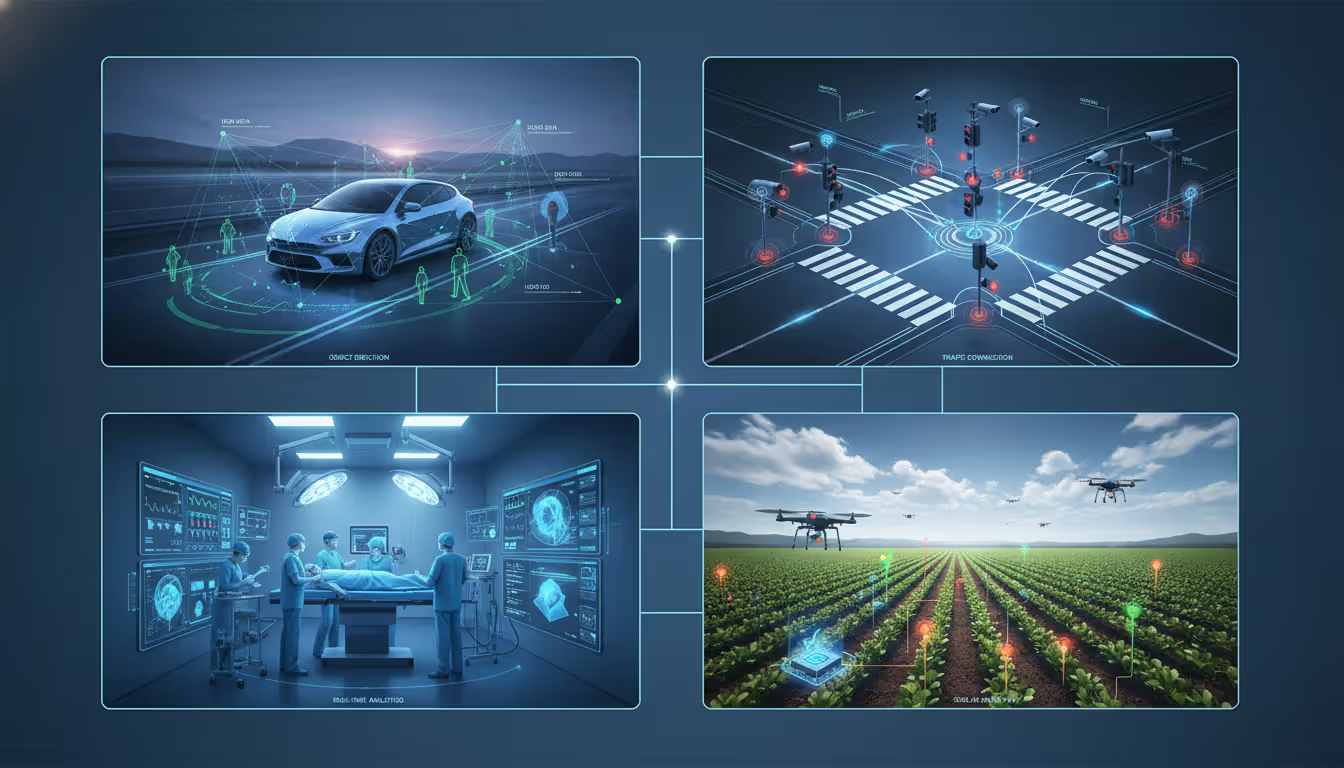
A hospital monitoring system demonstrates the distinction clearly. Patient vital signs from bedside monitors need immediate analysis—a sudden drop in blood pressure requires instant alerts to nursing staff. This processing happens at the edge, on hospital servers. Meanwhile, the same data feeds into cloud-based systems that analyze trends across thousands of patients to improve treatment protocols, a task that doesn't require split-second response.
The choice isn't binary. Most organizations implement hybrid architectures where edge handles immediate needs while cloud provides the heavy lifting for complex analytics and centralized management.
How Edge Computing Infrastructure Works
Edge computing infrastructure comprises multiple layers working together to process data close to its source while maintaining connections to broader networks.
Edge devices form the foundation. These include IoT sensors, cameras, industrial equipment, smartphones, and vehicles—anything generating data. Modern edge devices often include onboard processing capability. A security camera might run facial recognition algorithms locally rather than streaming raw video to a remote server.
Edge gateways sit between edge devices and the broader network. These intermediary systems aggregate data from multiple devices, perform initial filtering and processing, and manage communication. A factory floor might have dozens of sensors feeding data to a gateway that identifies patterns requiring attention and discards routine readings.
Edge servers or micro data centers provide more substantial computing power at local sites. These range from a single ruggedized server in a retail back room to a small data center with multiple racks serving a campus or facility. They run applications, store data temporarily, and handle processing tasks too complex for individual devices or gateways.
Connectivity layers link edge infrastructure to regional aggregation points and centralized cloud resources. This might involve fiber connections, 5G networks, satellite links, or combinations depending on location and requirements. The connectivity must be reliable but doesn't need the massive bandwidth that would be required if all raw data traveled to distant data centers.
Management and orchestration systems coordinate the distributed infrastructure. These tools deploy software updates, monitor performance, allocate resources, and ensure security across potentially thousands of edge locations. Managing edge infrastructure presents greater complexity than centralized systems because physical access to equipment is limited and conditions vary widely across locations.
Picture a smart city traffic management system. Intersection cameras and sensors (edge devices) detect vehicles, pedestrians, and cyclists. Local processors at each intersection (edge servers) adjust signal timing based on real-time conditions. District-level systems (regional aggregation) coordinate multiple intersections to optimize traffic flow across neighborhoods. City-wide analytics running in cloud data centers identify long-term patterns to improve infrastructure planning. Each layer handles the tasks it's best suited for.
Key Benefits of Edge Computing for Businesses
Latency reduction delivers the most immediate advantage. Applications requiring real-time responses simply cannot tolerate the delays inherent in sending data to distant data centers. Autonomous vehicles make steering and braking decisions in milliseconds based on sensor data processed onboard and at roadside edge infrastructure. Cloud processing introduces delays that would make autonomous operation impossible.
Manufacturing operations achieve similar benefits. A bottling plant using computer vision to inspect products needs instant feedback to reject defective items at production speed. Edge processing analyzes images and triggers rejection mechanisms in the 10-20 milliseconds available. Cloud-based processing would be 5-10 times slower.
Bandwidth savings become critical as connected devices proliferate. A retail store with 50 security cameras generating 4K video would require enormous bandwidth to stream all footage to the cloud continuously. Edge processing analyzes video locally, transmitting only relevant events—a suspected shoplifter, unusual crowd patterns, or safety incidents. This reduces bandwidth requirements by 95% or more while still capturing important information.
An offshore oil platform generates terabytes of sensor data daily from drilling equipment, pumps, and safety systems. Transmitting this volume via satellite links would be prohibitively expensive. Edge systems process data locally, sending only anomalies, summary statistics, and critical alerts to shore-based facilities.
Reliability improvements result from reduced dependence on network connectivity. Edge systems continue operating even when connections to centralized resources fail. A warehouse automation system with edge processing keeps robots working during internet outages, using locally cached instructions and real-time obstacle avoidance. Cloud-dependent systems would halt operations.
Healthcare facilities require this resilience. Patient monitoring systems must function regardless of network status. Edge processing ensures alarms trigger and life-support equipment adjusts based on local analysis even if hospital networks experience problems.
Data privacy and compliance concerns ease when sensitive information stays local. A hospital processing patient data at the edge can limit what information leaves the facility, simplifying HIPAA compliance. Only anonymized, aggregated data needs transmission to cloud systems for broader analysis.
Retail businesses analyze customer behavior through in-store cameras and WiFi tracking without sending personally identifiable information off-premises. Edge systems identify patterns—which displays attract attention, how customers navigate stores—while protecting individual privacy.
Real-time processing enables applications impossible with cloud architectures. Augmented reality systems overlay digital information on physical environments based on what users see. This requires processing visual data and rendering graphics in under 20 milliseconds to avoid disorienting lag. Edge computing in AR headsets and nearby infrastructure makes this feasible.
Industrial automation uses real-time processing for predictive maintenance. Vibration sensors on motors feed data to edge processors running machine learning models that detect bearing wear, misalignment, or other developing problems. Maintenance crews receive alerts days or weeks before failures occur, preventing unplanned downtime.
Author: Chloe Bramwell;
Source: baltazor.com
Edge Computing Data Centers Explained
Edge data centers differ fundamentally from the massive facilities operated by cloud providers. While a typical AWS or Azure data center might span hundreds of thousands of square feet and house tens of thousands of servers, edge data centers operate at much smaller scales optimized for local deployment.
Size and scale vary based on application. A micro data center might consist of a single rack—roughly the size of a refrigerator—installed in a retail store, bank branch, or factory. These self-contained units include servers, networking equipment, power conditioning, and cooling in a compact, often ruggedized enclosure. Larger edge facilities serving a campus, neighborhood, or small city might occupy a room or small building with 10-50 racks.
The defining characteristic isn't absolute size but rather distribution. Instead of one facility serving an entire region, edge architecture deploys many smaller facilities positioned to minimize latency to end users and devices.
Location strategy prioritizes proximity to data sources and users over traditional data center site selection criteria. Edge facilities appear in retail spaces, office buildings, cell towers, and industrial sites—locations chosen for their nearness to where computing is needed rather than access to cheap power and fiber connectivity.
A telecommunications company might deploy edge data centers in hundreds of cell tower facilities to support 5G services requiring ultra-low latency. A content delivery network positions edge servers in internet exchange points and ISP facilities to cache popular content close to viewers. These locations would never host traditional data centers but make perfect sense for edge deployment.
Power and cooling requirements differ from traditional facilities. Edge locations often lack the robust electrical infrastructure and cooling capacity of purpose-built data centers. Equipment must operate efficiently in less controlled environments—retail back rooms without dedicated HVAC, outdoor enclosures subject to weather extremes, or industrial settings with dust and vibration.
Modern edge infrastructure uses liquid cooling, high-efficiency power supplies, and intelligent thermal management to operate in these conditions. A micro data center might draw 5-10 kilowatts—comparable to a large air conditioner—rather than the megawatts consumed by traditional facilities.
Management challenges multiply with distributed deployment. A company operating 1,000 edge locations faces different problems than one managing three regional data centers. Physical access requires local technicians or shipping replacement components rather than having staff onsite. Remote management tools must handle diverse network conditions and limited bandwidth.
Standardization becomes essential. Using identical hardware configurations and automated deployment procedures across edge locations reduces complexity. When a server fails at a remote site, shipping a pre-configured replacement that staff can install without specialized knowledge keeps operations running.
Common Use Cases and Applications
IoT device management represents one of the largest edge computing applications. Smart buildings deploy thousands of sensors monitoring temperature, occupancy, energy usage, and equipment status. Edge gateways aggregate this data, identify patterns requiring action—a malfunctioning HVAC unit, unusual energy consumption suggesting equipment problems—and control building systems in real-time. Only summary data and alerts travel to centralized management systems.
Agriculture uses IoT sensors throughout fields to monitor soil moisture, temperature, and crop health. Edge processing analyzes this data to control irrigation systems, adjusting water delivery based on real-time conditions in different field zones. Farmers access summary dashboards and recommendations without managing the underlying data streams.
Autonomous vehicles depend entirely on edge computing. Self-driving cars process sensor data—cameras, lidar, radar—onboard to make immediate driving decisions. Roadside edge infrastructure enhances these capabilities by providing broader situational awareness: traffic conditions ahead, pedestrians in blind spots, coordination with traffic signals. The latency requirements make cloud processing impossible for real-time operation, though vehicles upload data to cloud systems for map updates and machine learning model improvements.
Smart city infrastructure coordinates traffic signals, streetlights, parking systems, and public safety resources using edge computing. Traffic management systems process camera and sensor data at intersections to optimize signal timing, then coordinate across districts to improve traffic flow. Emergency vehicle preemption happens at the edge—traffic signals detect approaching ambulances and clear their path without waiting for instructions from centralized systems.
Augmented and virtual reality applications require edge computing to deliver responsive experiences. AR systems overlay digital information on physical environments based on what users see through headsets or smartphones. Processing must happen within 20 milliseconds to avoid disorienting lag between head movements and display updates. Edge servers positioned near users handle rendering and processing, with cloud systems providing content and application logic.
Retail stores use AR to let customers visualize furniture in their homes or try on clothing virtually. Edge processing ensures smooth, responsive experiences that cloud-based systems couldn't deliver.
Industrial automation and manufacturing leverage edge computing for real-time control and monitoring. Robotic assembly lines use edge processors to coordinate multiple robots, adjust operations based on sensor feedback, and maintain quality control through computer vision inspection. Predictive maintenance systems analyze equipment sensor data continuously to detect developing problems before failures occur.
A steel mill uses edge computing to monitor furnace operations, adjusting temperature and material flow based on real-time conditions. The precision required—controlling processes to within seconds and fractions of a degree—demands local processing. Cloud systems handle broader production planning and quality trend analysis.
Video analytics and surveillance process camera feeds locally to identify events of interest. Retail analytics systems track customer movement patterns, dwell times near displays, and queue lengths without sending video streams off-premises. Security systems detect unusual behavior, unauthorized access, or safety violations, alerting personnel only when intervention is needed.
Sports stadiums deploy edge computing to analyze camera feeds from hundreds of cameras, enabling automated highlight generation, fan experience enhancements, and security monitoring without overwhelming network connections with raw video streams.
Author: Chloe Bramwell;
Source: baltazor.com
Challenges and Considerations When Implementing Edge Computing
Security concerns multiply with distributed infrastructure. Each edge location represents a potential attack surface. Physical security at remote sites may be limited—a micro data center in a retail store is more accessible than a guarded cloud facility. Network connections between edge locations and central systems create additional vulnerabilities.
Organizations must implement security at multiple layers: physical protections for edge equipment, encrypted communications, authentication for devices and users, and monitoring for anomalous behavior. The distributed nature makes centralized security monitoring more difficult while simultaneously increasing the number of points requiring protection.
Firmware and software updates across thousands of edge devices present particular challenges. Vulnerabilities discovered in edge equipment require coordinated patching across distributed deployments, often with limited maintenance windows and varying network conditions.
Management complexity increases dramatically compared to centralized infrastructure. Deploying updates, monitoring performance, and troubleshooting problems across hundreds or thousands of edge locations requires sophisticated orchestration tools and procedures. Organizations accustomed to managing a few data centers face a steep learning curve.
Remote locations may lack reliable connectivity for management purposes. A mining operation or offshore platform might have limited, expensive satellite links. Management systems must handle intermittent connectivity, queue updates and configuration changes, and provide meaningful monitoring despite communication constraints.
Initial costs can be substantial. While edge computing reduces ongoing bandwidth and cloud processing expenses, the upfront investment in distributed hardware, deployment, and management infrastructure represents a significant commitment. Each edge location requires servers, networking equipment, power conditioning, and installation—costs that multiply across deployments.
The economic case depends on application requirements. Organizations with genuine needs for low latency, bandwidth reduction, or local processing find clear returns on investment. Those pursuing edge computing because it seems trendy may struggle to justify costs.
Skills gaps affect many organizations implementing edge computing. The technology requires understanding of distributed systems, network architecture, IoT protocols, and security in ways that traditional IT teams may not possess. Finding staff with relevant experience or training existing teams takes time and resources.
Vendor ecosystems remain fragmented. Unlike mature cloud platforms with standardized interfaces and extensive documentation, edge computing involves numerous vendors with varying approaches and compatibility. Integration challenges and vendor lock-in risks complicate deployments.
Standardization issues persist across the edge computing industry. Lack of common protocols, management interfaces, and architectural patterns means organizations often build custom solutions or commit to specific vendor ecosystems. This increases complexity and reduces flexibility compared to standardized cloud environments.
Industry groups are working toward common standards, but edge computing's diversity—from tiny IoT devices to substantial edge data centers—makes universal standards difficult. Organizations should evaluate their tolerance for working with emerging, evolving technologies before committing to large-scale edge deployments.
By 2026, more than 50% of enterprise-managed data will be created and processed outside the data center or cloud, up from less than 10% in 2021. This shift fundamentally changes how organizations approach infrastructure and application architecture
— Bob Gill
Frequently Asked Questions About Edge Computing
Is edge computing replacing cloud computing?
No, edge computing complements rather than replaces cloud infrastructure. The two serve different purposes within modern IT architectures. Edge handles time-sensitive processing, bandwidth-intensive applications, and scenarios requiring local data processing. Cloud provides massive scale, sophisticated services, long-term storage, and centralized management. Most organizations implement hybrid approaches where edge and cloud work together, each handling tasks suited to its strengths.
What industries benefit most from edge computing?
Manufacturing, healthcare, retail, telecommunications, transportation, and energy see the most immediate benefits. These industries deal with real-time requirements, distributed operations, or massive data volumes from sensors and devices. However, edge computing applications are expanding into virtually every sector as IoT adoption grows and latency-sensitive applications become more common. Financial services use edge computing for low-latency trading. Entertainment leverages it for content delivery and immersive experiences.
How much does edge computing infrastructure cost?
Costs vary enormously based on scale and requirements. A simple edge gateway might cost $1,000-5,000. A micro data center for a retail location runs $20,000-50,000 including equipment and installation. Larger edge facilities serving campuses or neighborhoods can exceed $500,000. Ongoing costs include connectivity, power, maintenance, and management software. Organizations should budget for both initial deployment and operational expenses, which differ from cloud's pay-as-you-go model.
What is the difference between edge computing and fog computing?
Fog computing refers to a specific architectural layer between edge devices and cloud data centers—essentially a middle tier that aggregates data from multiple edge locations. The terms are sometimes used interchangeably, but fog typically describes regional or campus-level processing that sits between local edge infrastructure and centralized cloud. Edge computing is the broader concept of distributed processing near data sources. Fog computing is one way to implement that concept.
Do I need 5G for edge computing?
5G networks enhance edge computing by providing high-bandwidth, low-latency wireless connectivity, but edge computing works with various network technologies. Many edge deployments use wired connections, 4G LTE, WiFi, or even satellite links depending on location and requirements. 5G becomes important for mobile edge computing scenarios—autonomous vehicles, AR/VR, smart city infrastructure—where wireless connectivity is essential and latency requirements are strict. Fixed edge installations often use traditional networking.
How secure is edge computing compared to centralized cloud?
Edge computing presents different security challenges rather than being inherently more or less secure. Edge locations have more distributed attack surfaces and may lack physical security of centralized facilities. However, keeping sensitive data local reduces exposure during transmission and can simplify compliance with data sovereignty requirements. Security depends on implementation—proper authentication, encryption, monitoring, and physical protections make edge deployments secure. Organizations must invest in security appropriate to their distributed architecture rather than relying on centralized cloud provider protections.
Edge computing addresses fundamental limitations of centralized cloud architectures by processing data where it originates. The approach delivers measurable benefits—reduced latency, bandwidth savings, improved reliability—for applications with real-time requirements or distributed operations generating massive data volumes.
Successful implementation requires careful evaluation of actual needs versus technology trends. Organizations should identify specific use cases where edge computing solves real problems: manufacturing processes requiring millisecond response times, retail analytics processing video locally, IoT deployments generating more data than networks can economically transmit. Edge computing deployed without clear requirements often creates complexity without corresponding benefits.
The technology continues maturing as vendors develop more sophisticated management tools, standards emerge, and best practices become established. Organizations beginning edge computing journeys in 2026 benefit from lessons learned by early adopters while still facing challenges inherent in distributed architectures.
The question isn't whether edge computing will become important but rather how organizations can effectively integrate distributed processing into their IT strategies. Those who understand the trade-offs, invest appropriately in infrastructure and skills, and focus on applications genuinely benefiting from edge architecture will gain competitive advantages. Those pursuing edge computing as a checkbox technology risk complexity without commensurate returns.
Start small, prove value in specific use cases, and expand based on demonstrated benefits. Edge computing represents a significant architectural shift, but like any technology, its value depends on thoughtful application to real business problems.
When you print thousands of product labels or engrave a QR code onto a memorial plaque, that code must work indefinitely. Learn which QR code types never expire, how to generate permanent codes, and mistakes that can make even 'permanent' codes fail
Organizations lose $5,600 per minute during network downtime. A network traffic monitor provides visibility into data flows, enabling IT teams to maintain performance, troubleshoot issues, and detect threats before escalation. This guide covers implementation, tool selection, and best practices
Network infrastructure failures cost enterprises an average of $9,000 per minute in 2026. This comprehensive guide covers network monitoring fundamentals, tool selection, deployment options, and alert configuration best practices to help organizations maintain optimal network performance
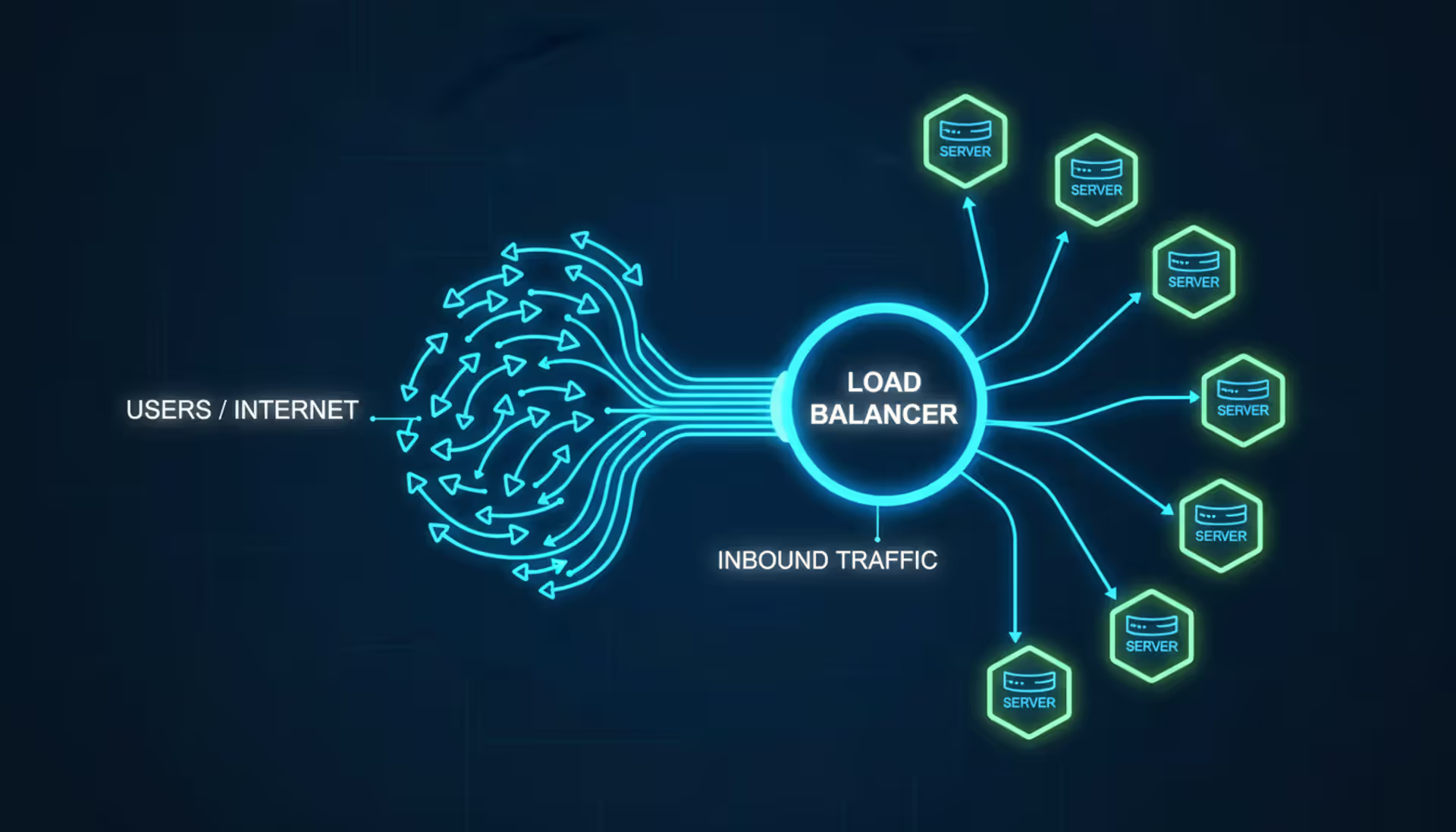
Load balancers distribute network traffic across multiple servers to prevent overload and ensure high availability. This guide covers load balancer architecture, algorithms, DNS-based methods, cloud services vs on-premises solutions, and implementation best practices for modern infrastructure
The content on this website is provided for general informational and educational purposes only. It is intended to explain concepts related to cloud computing, computer networking, infrastructure, and modern IT systems.
All information on this website, including articles, guides, and examples, is presented for general educational purposes. Technology implementations may vary depending on specific environments, business needs, infrastructure design, and technical requirements.
This website does not provide professional IT, engineering, or technical advice, and the information presented should not be used as a substitute for consultation with qualified IT professionals.
The website and its authors are not responsible for any errors or omissions, or for any outcomes resulting from decisions made based on the information provided on this website.